SÔNG SỐNG SONG (a river, life, death), Part 2, Parramatta Laneways, 2026.
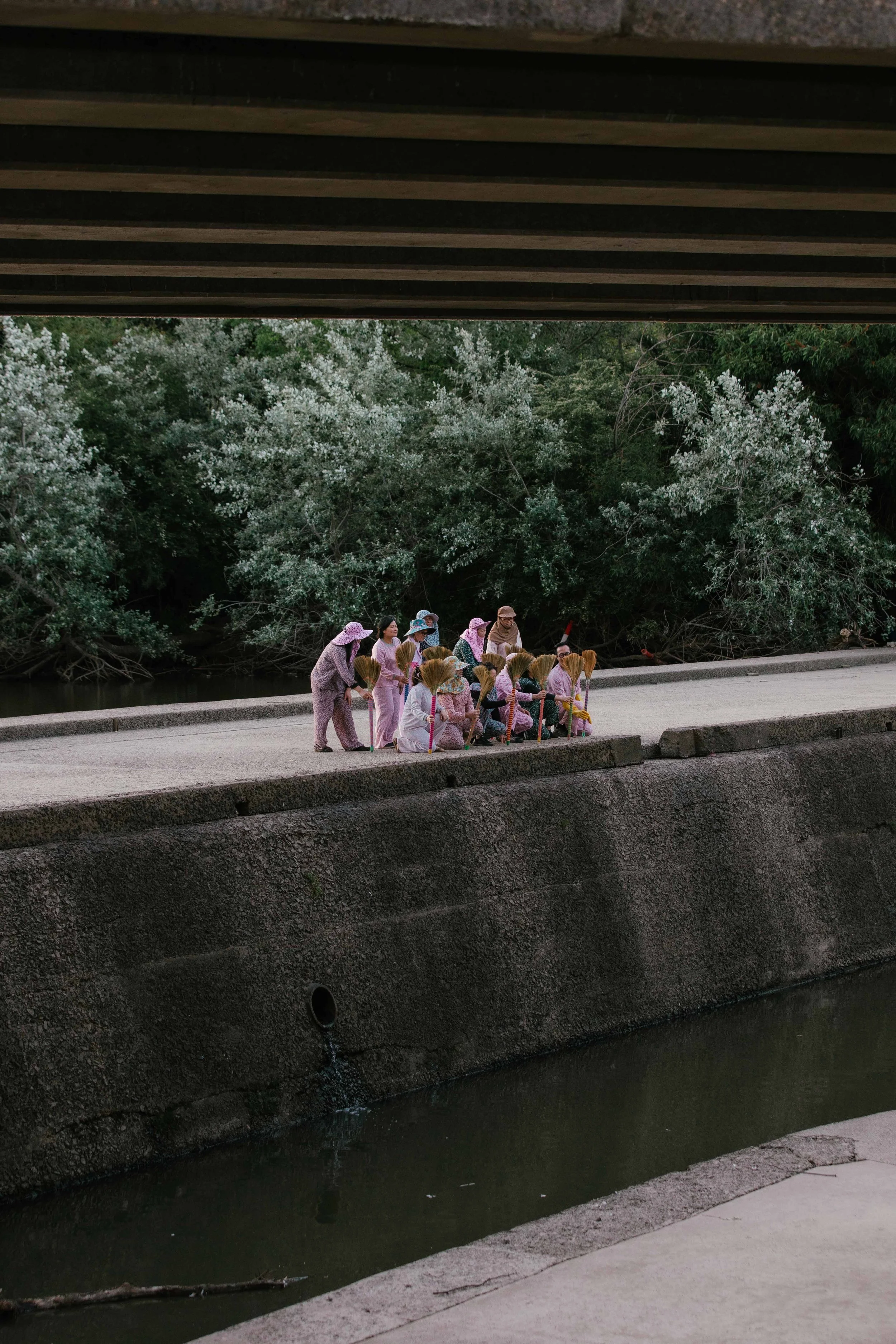
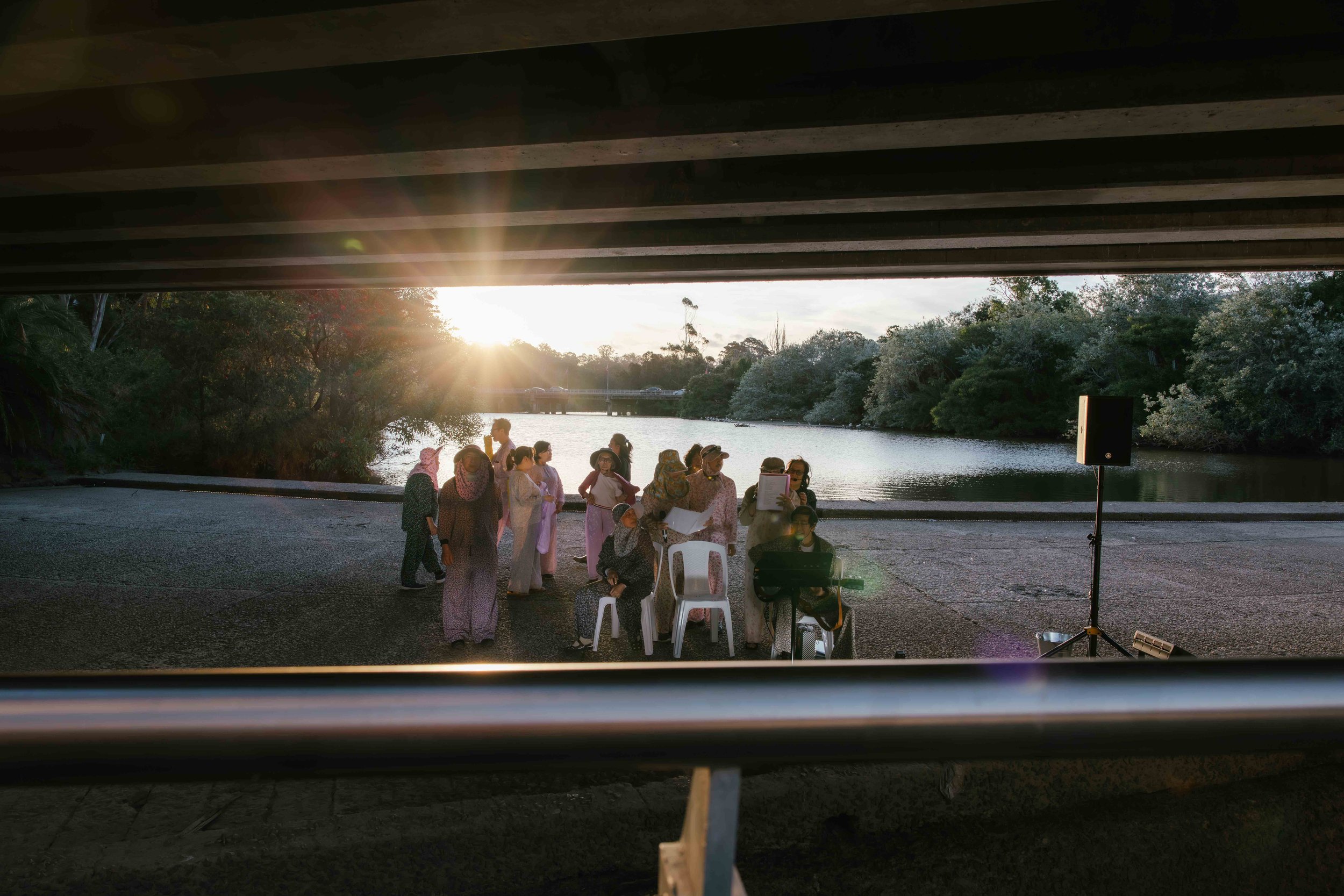
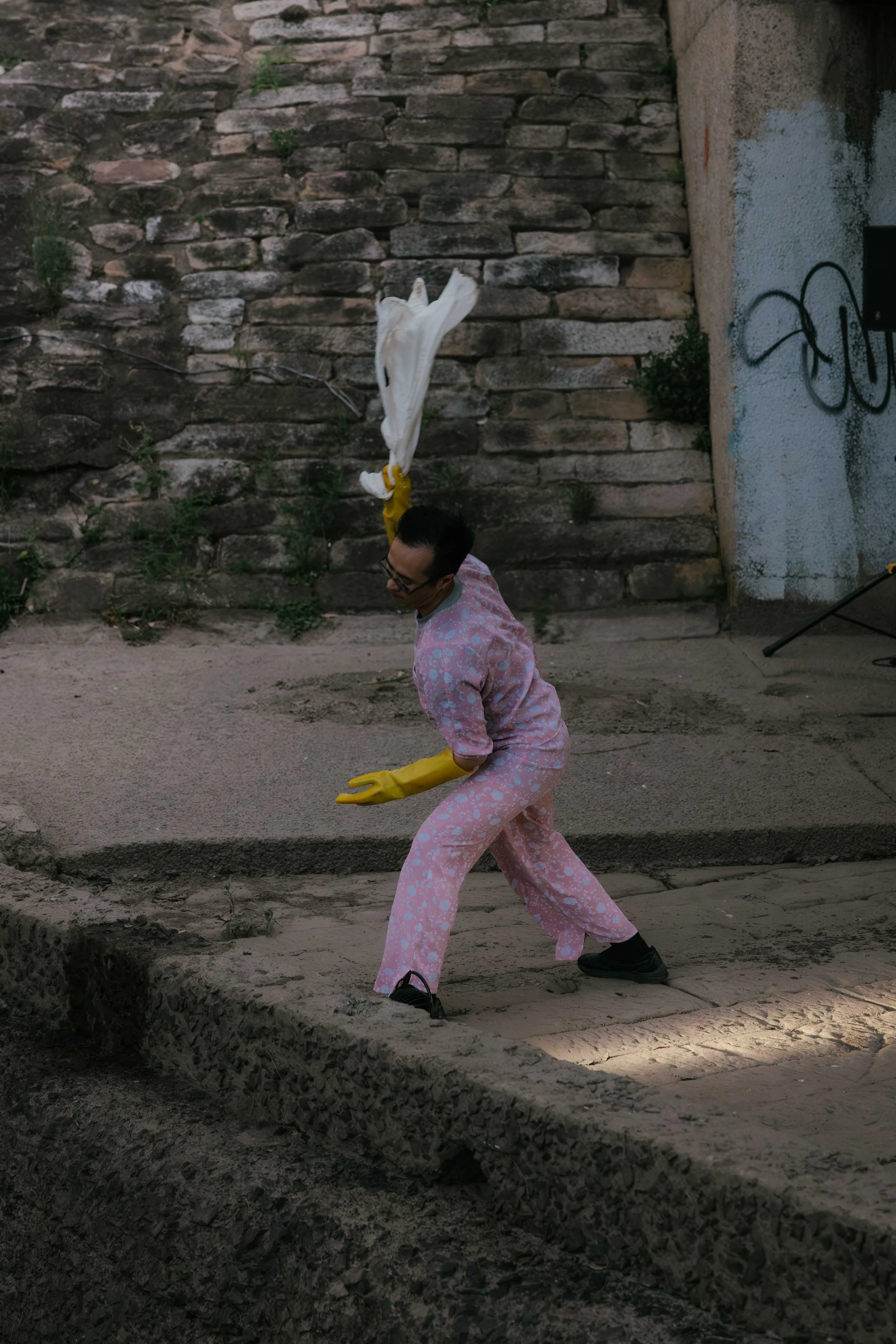
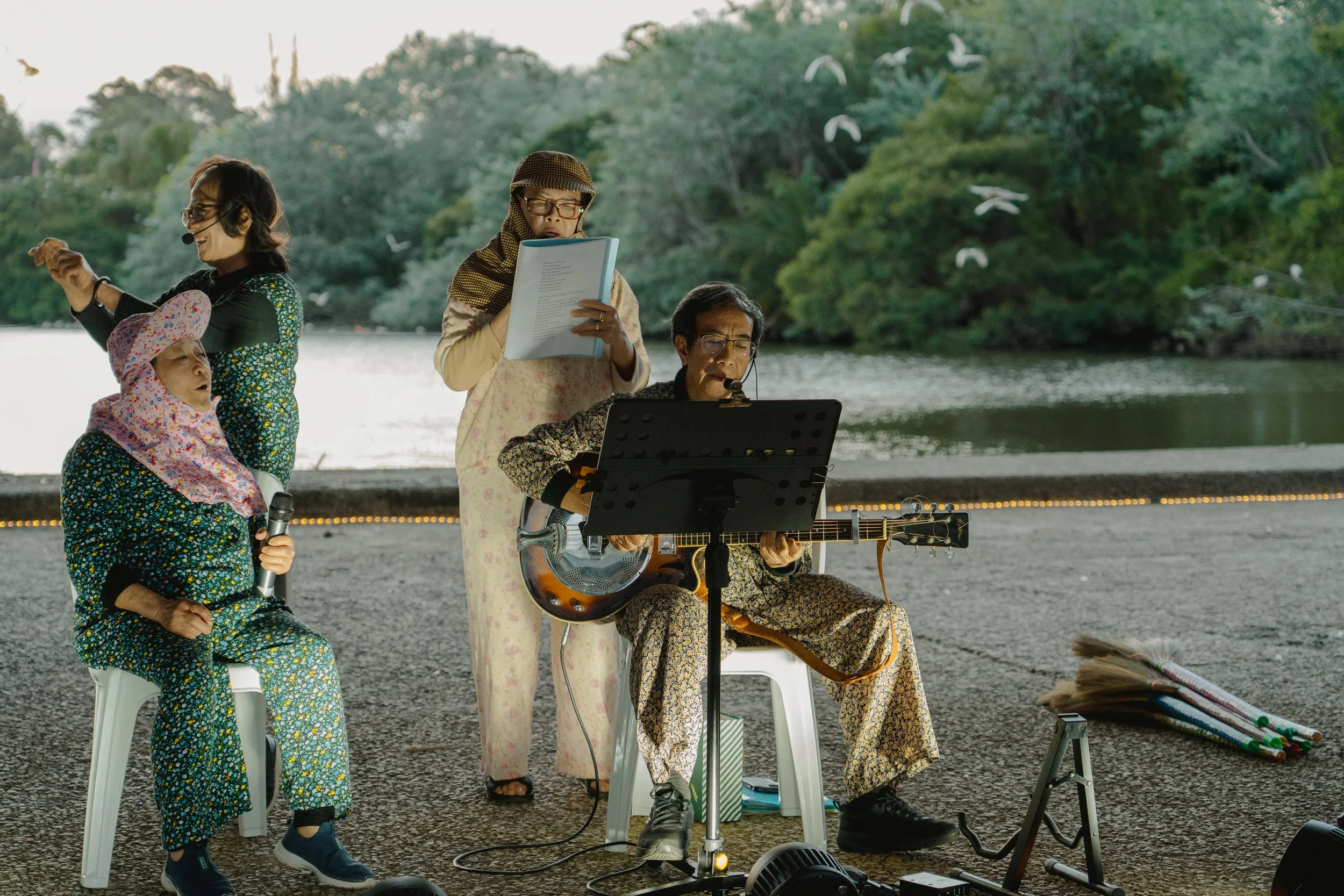
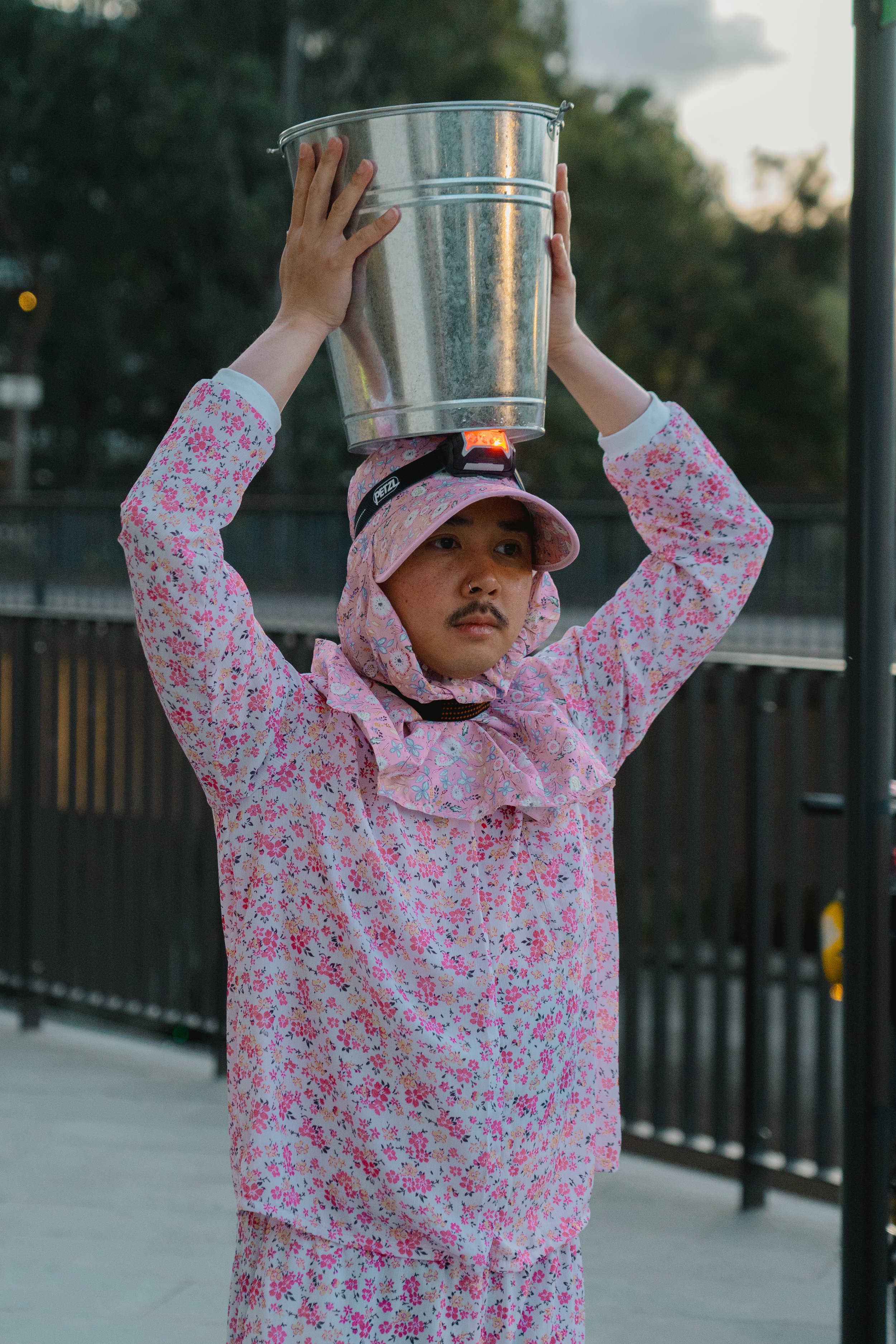
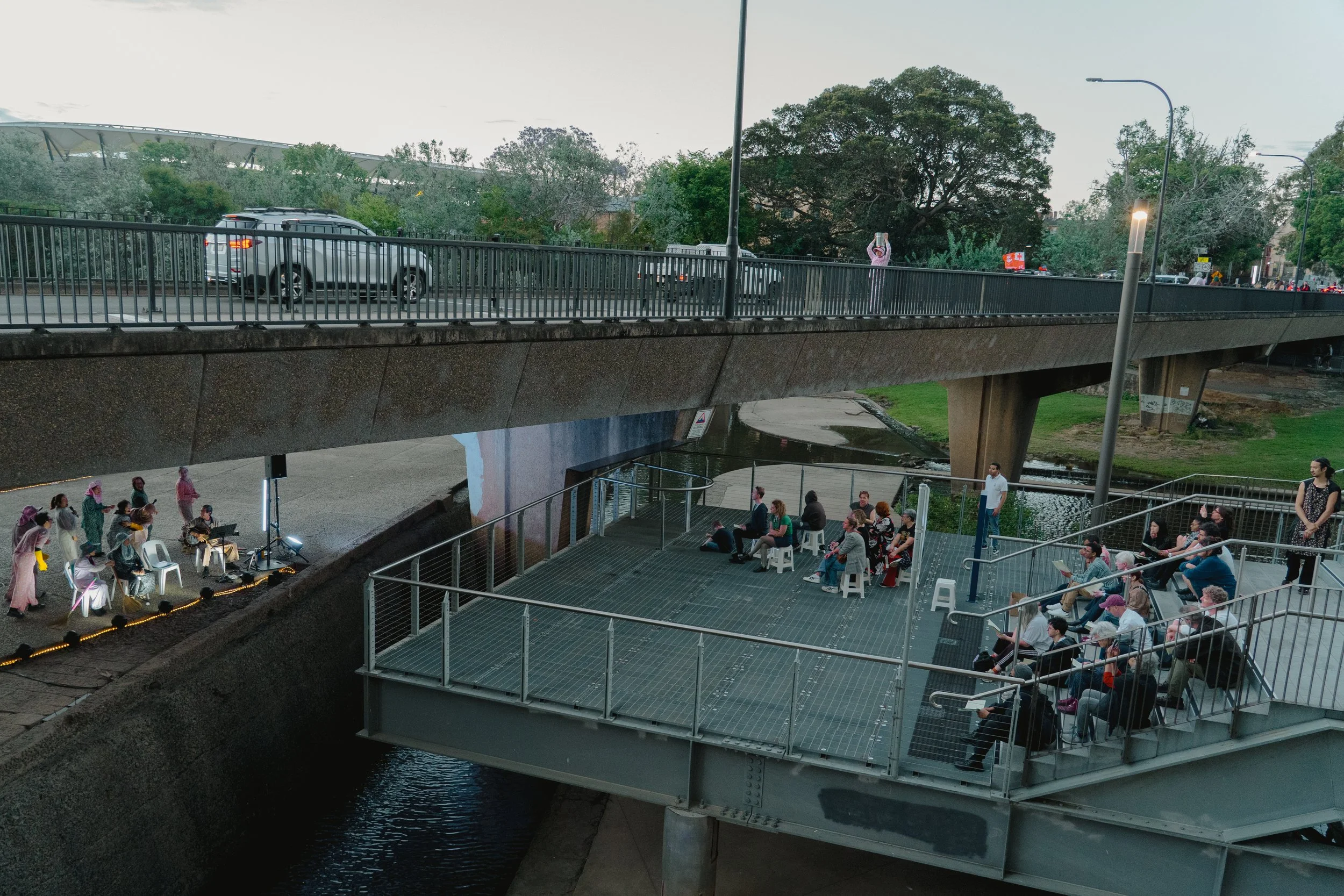
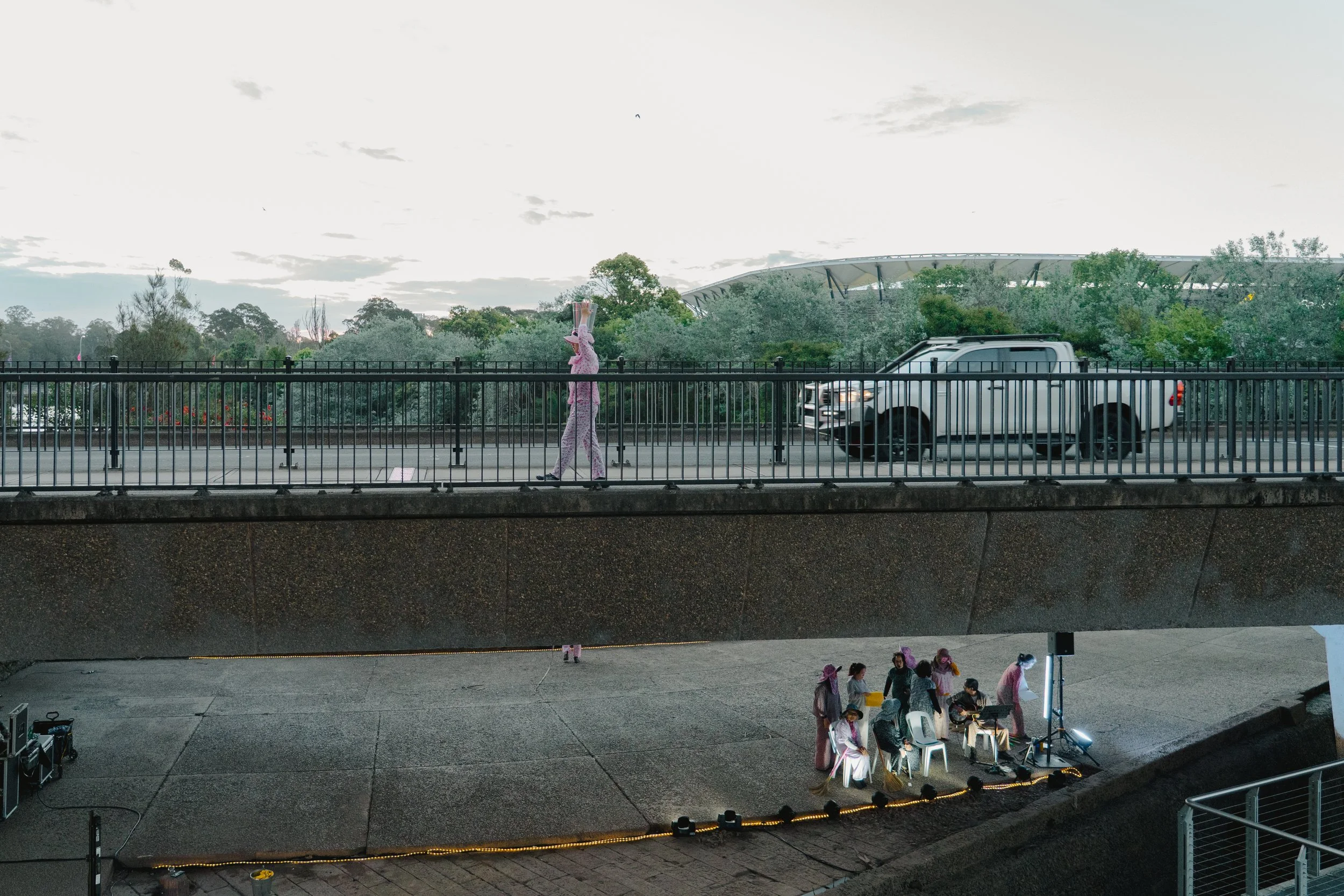
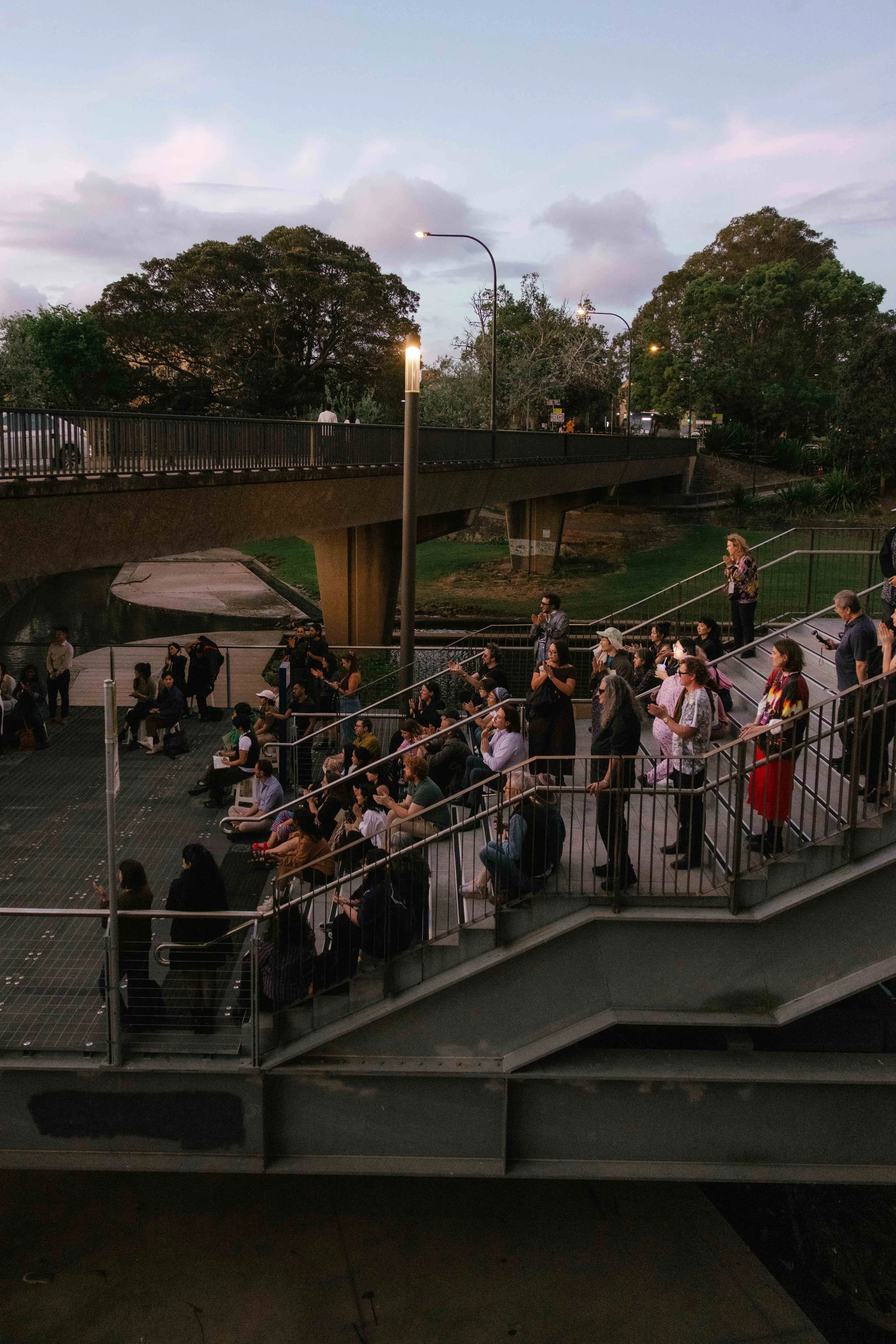
A four-night performance at sunset, held by Baramadagal (the Parramatta River) on the Marsden Street Weir—a colonial-era infrastructure that continues to profoundly disrupt the seasonal flow of water.
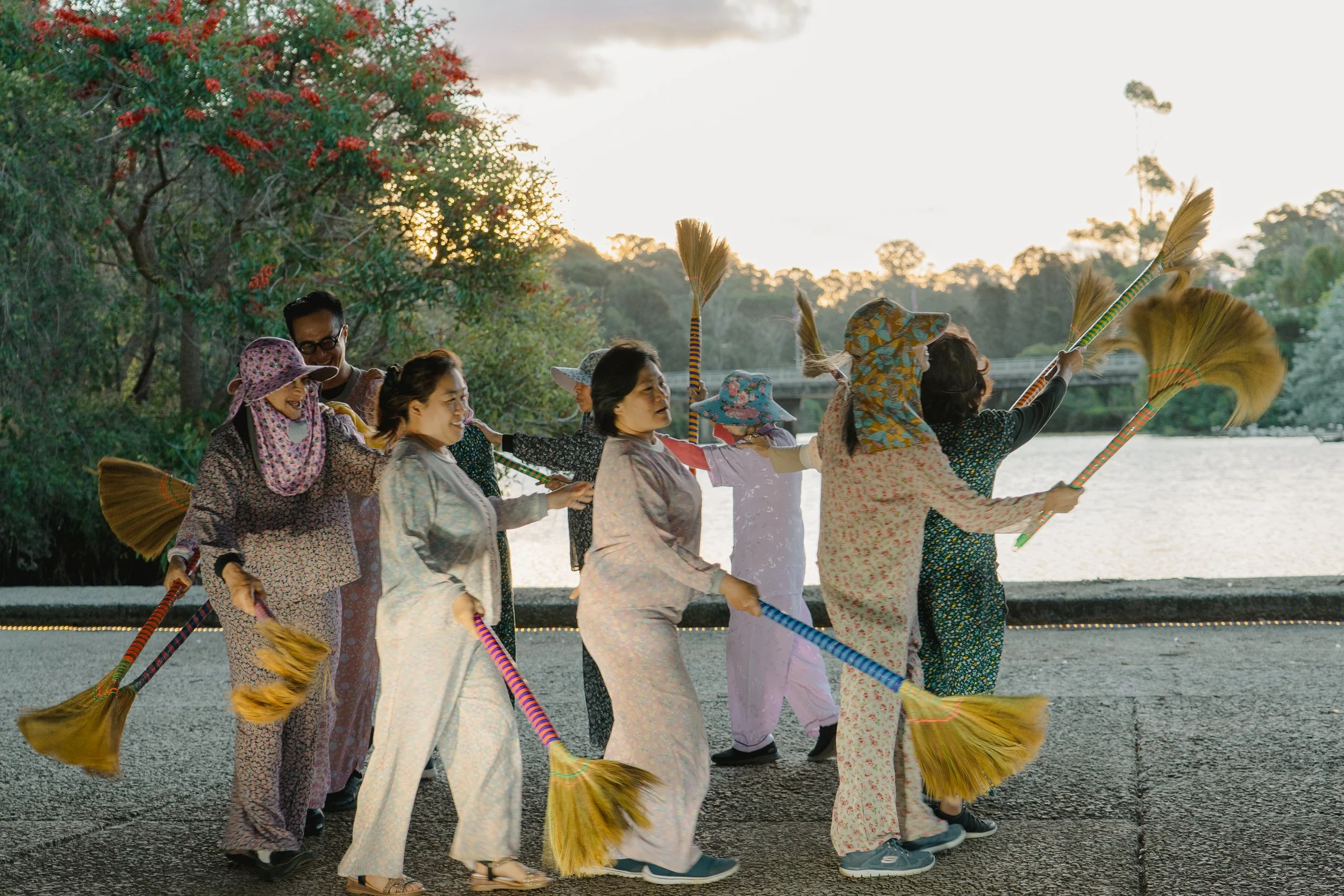
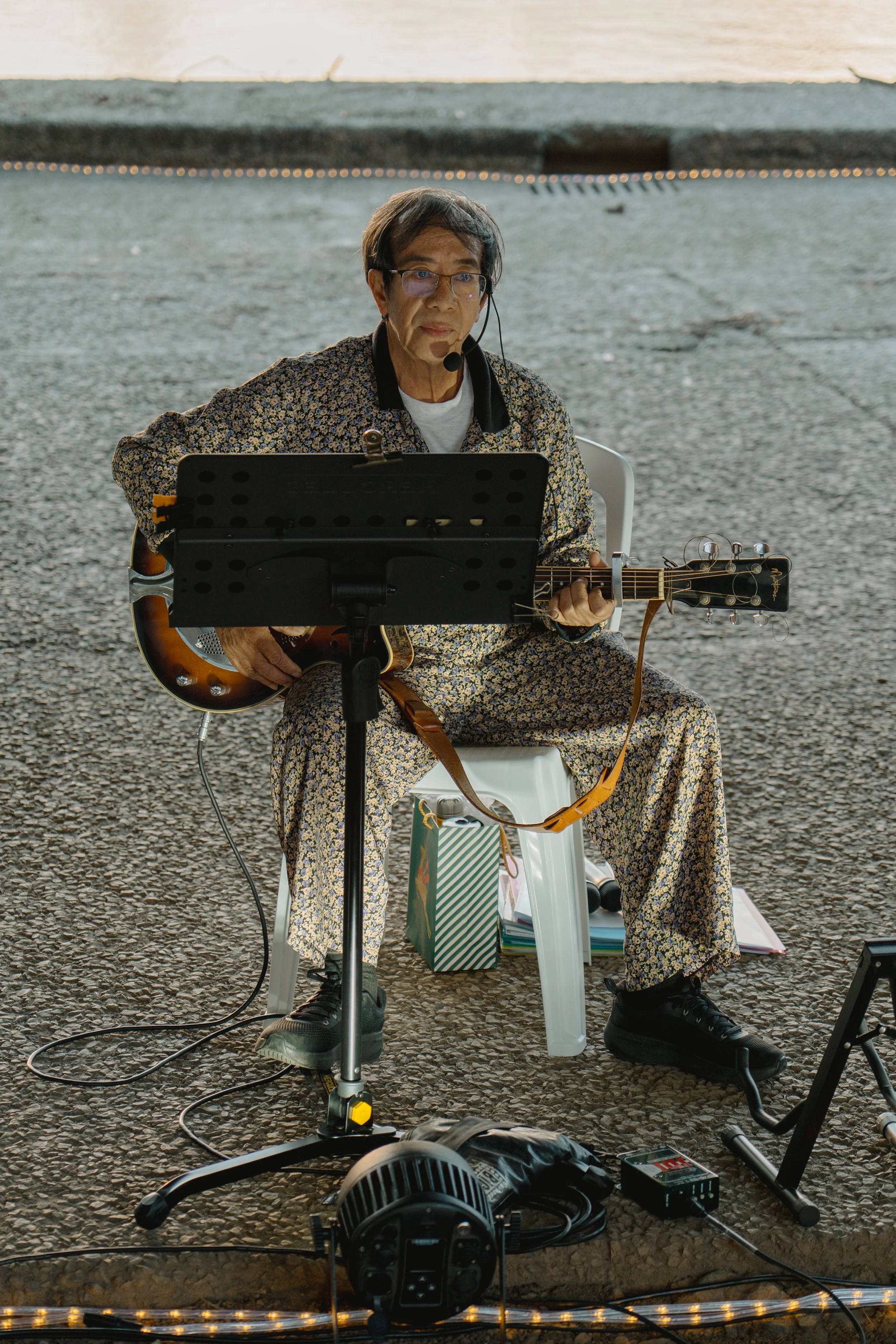
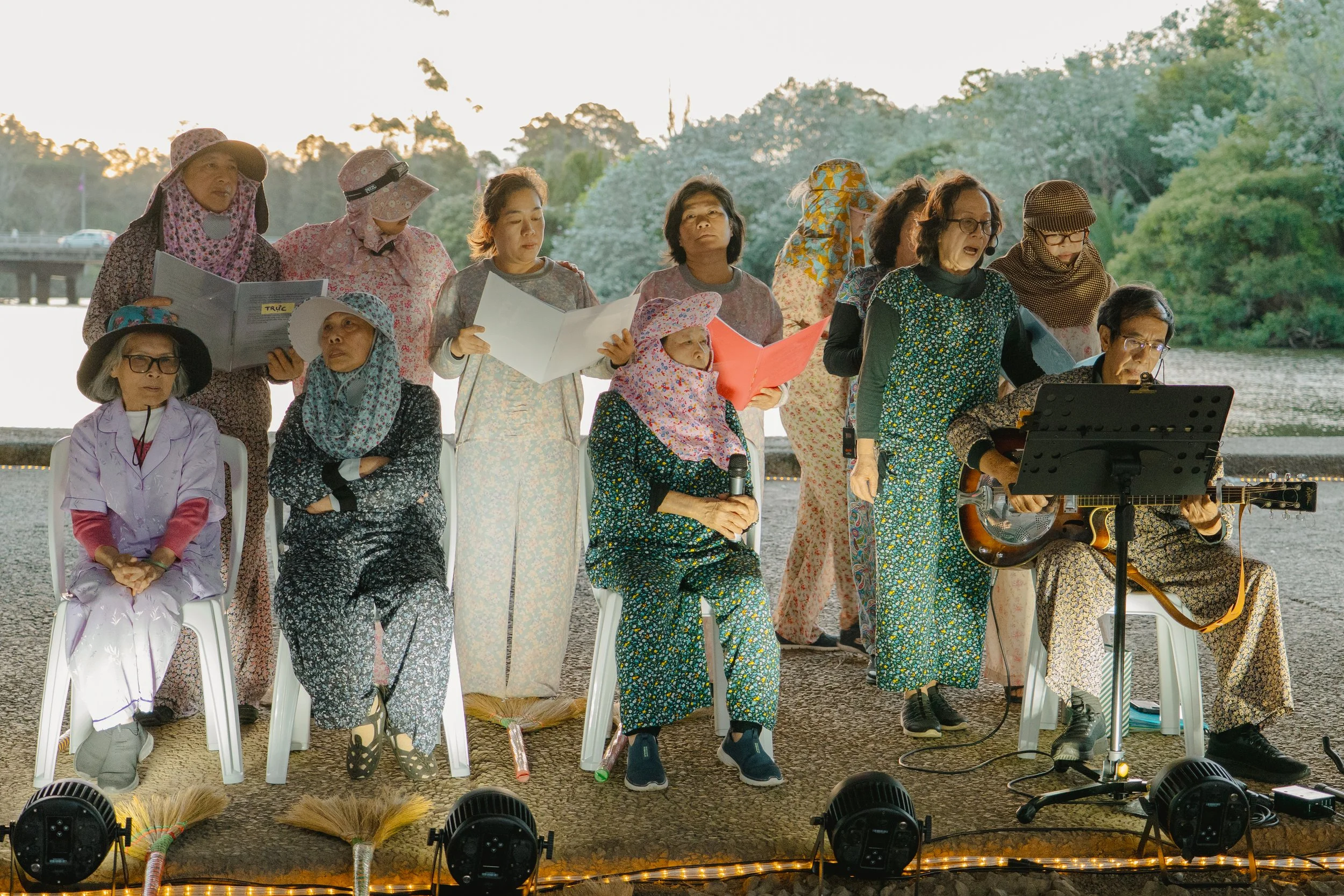
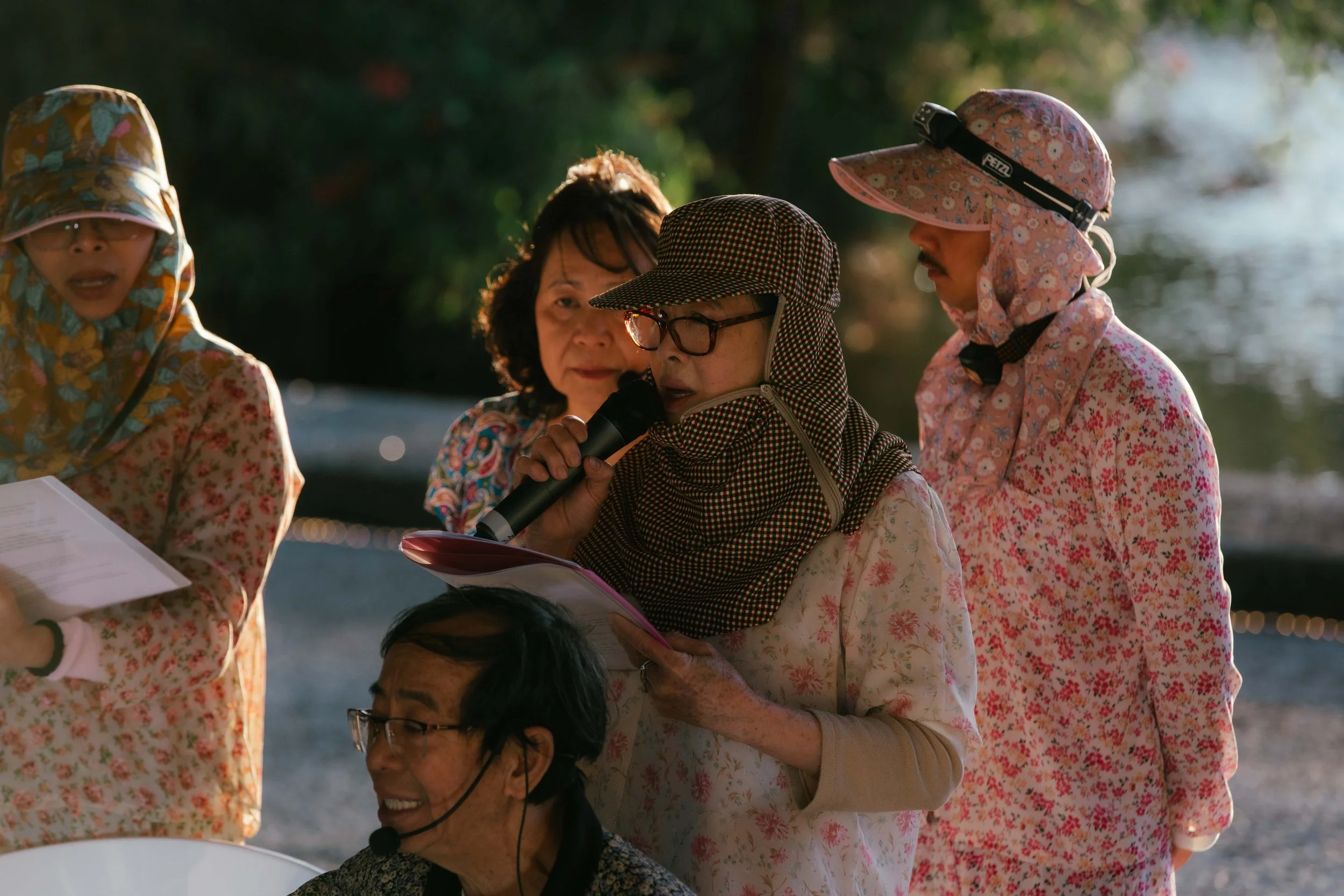
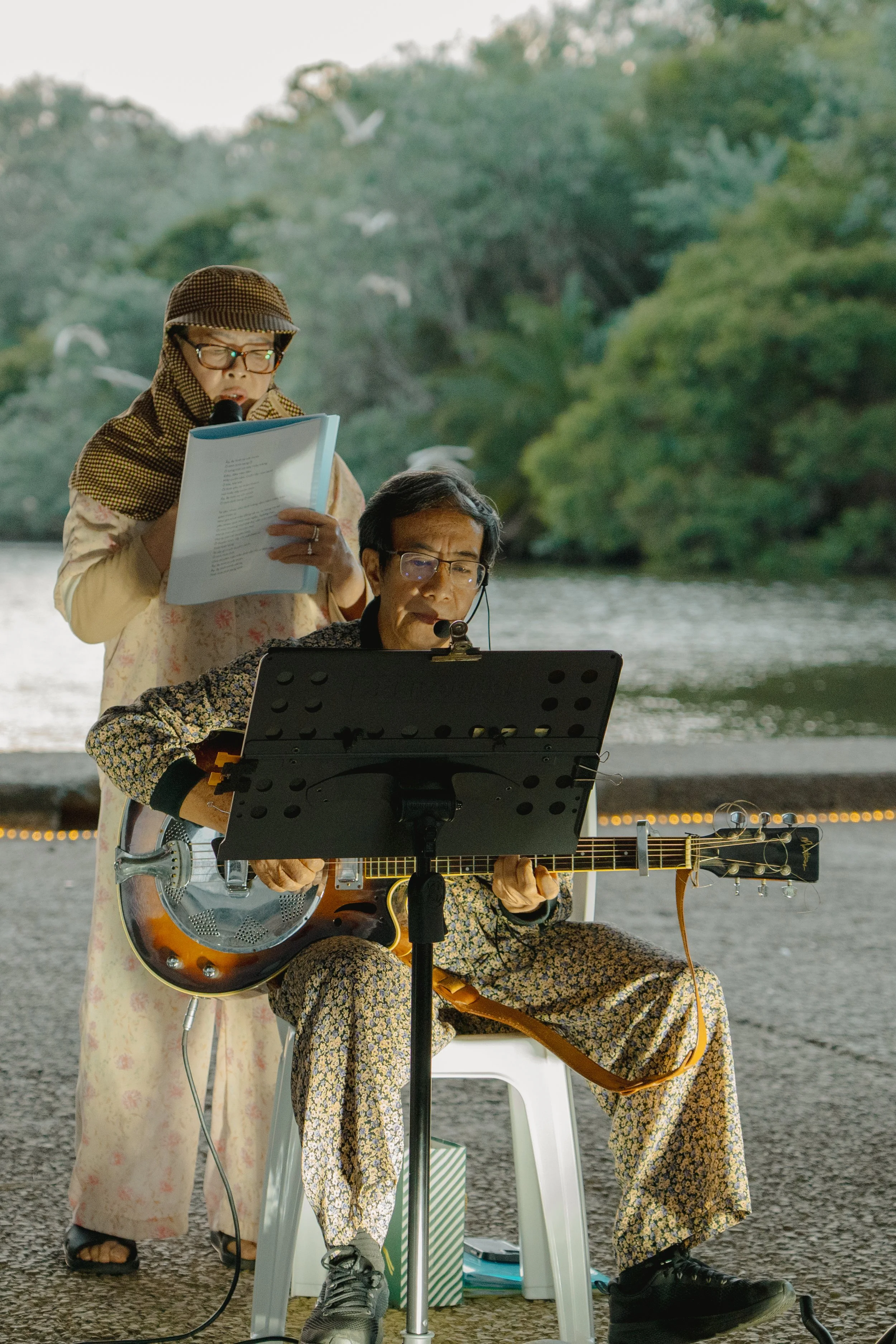
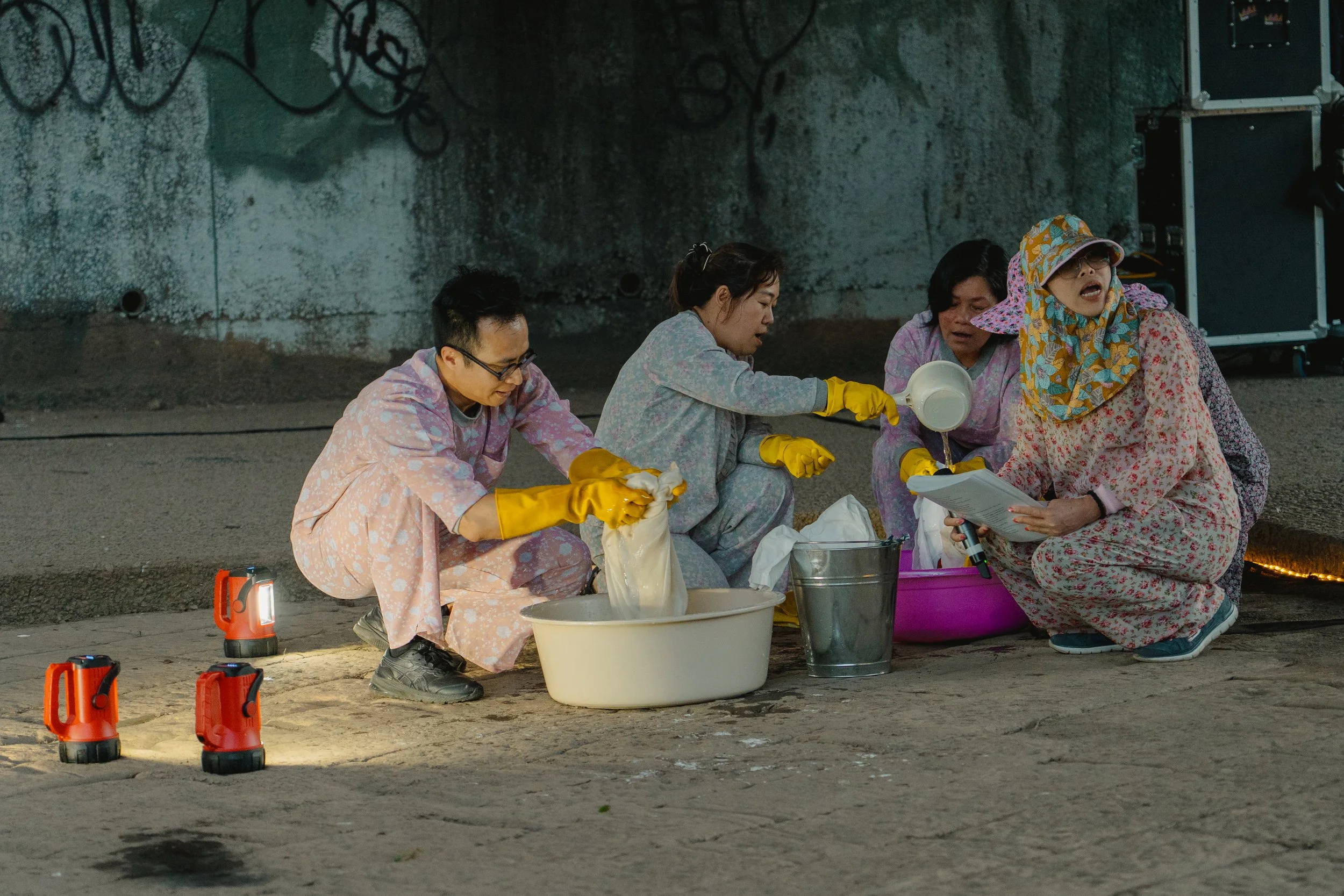
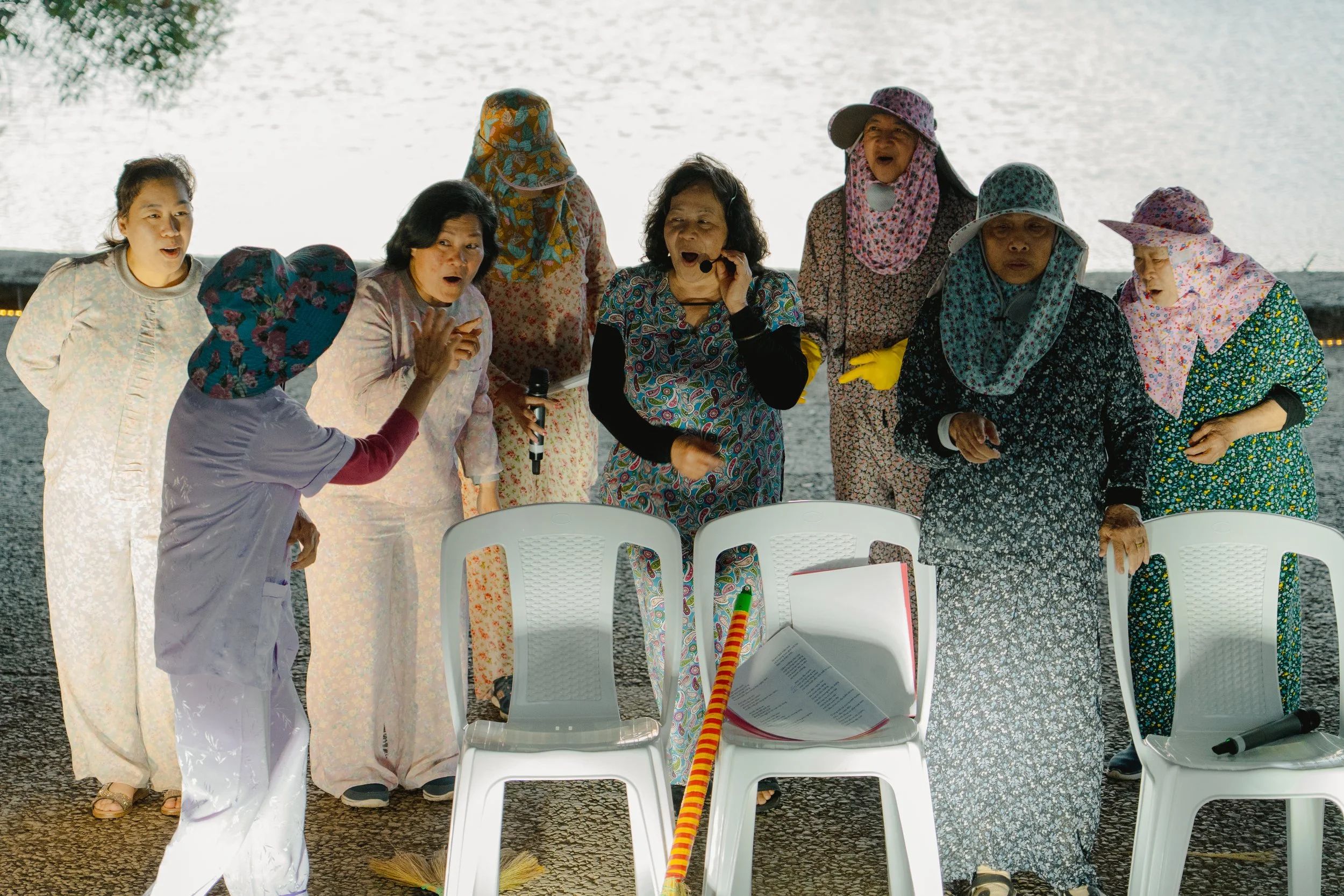
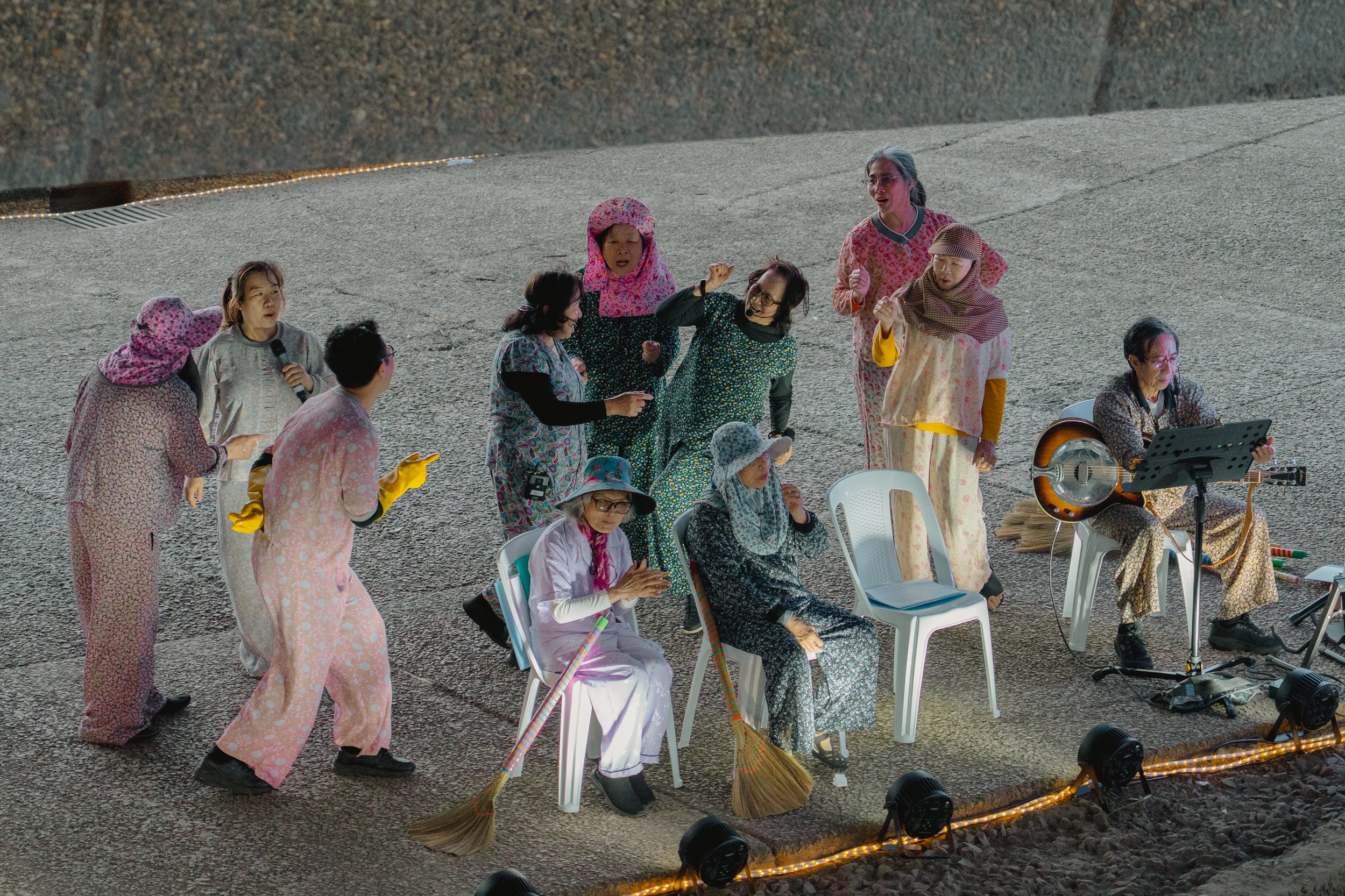
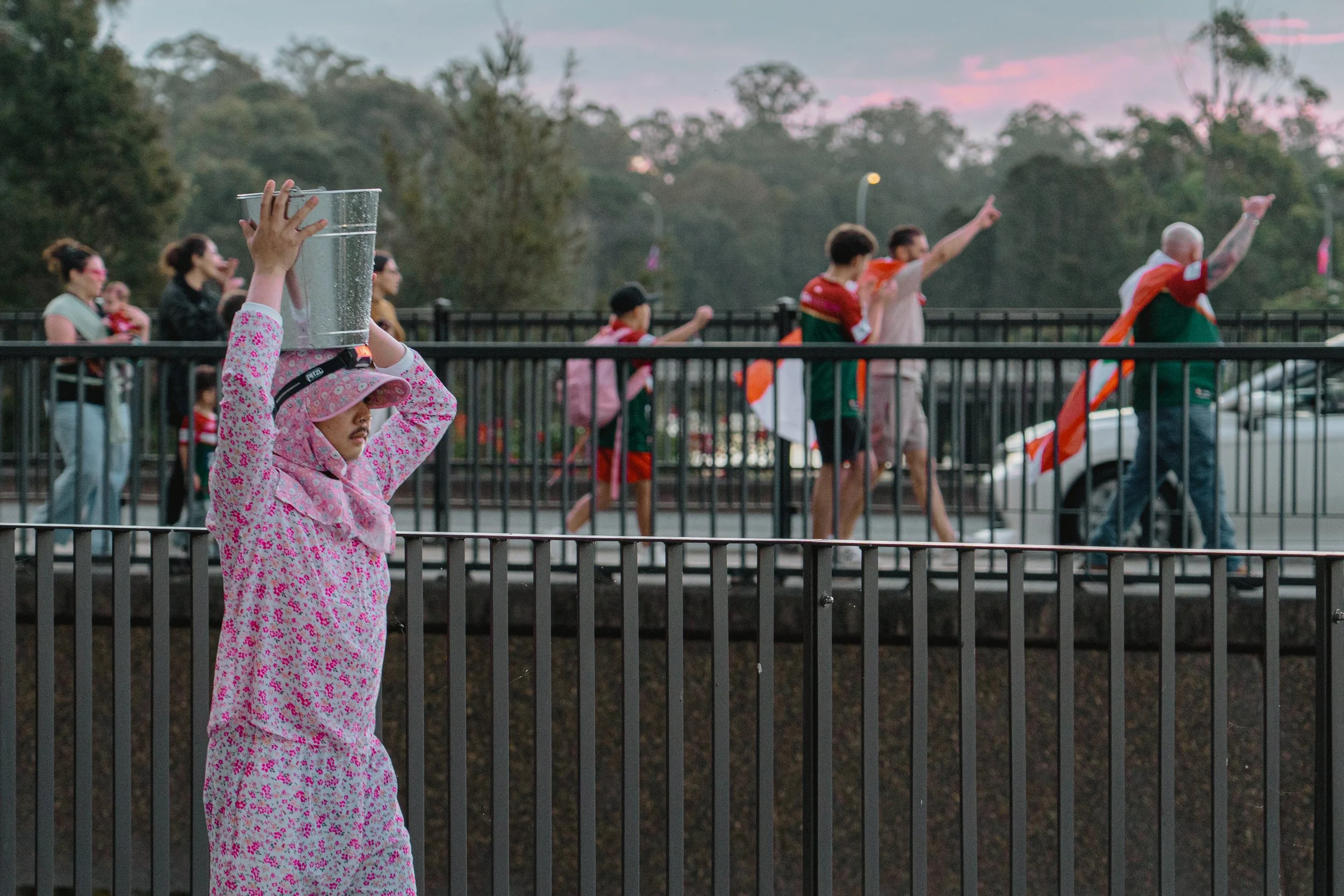
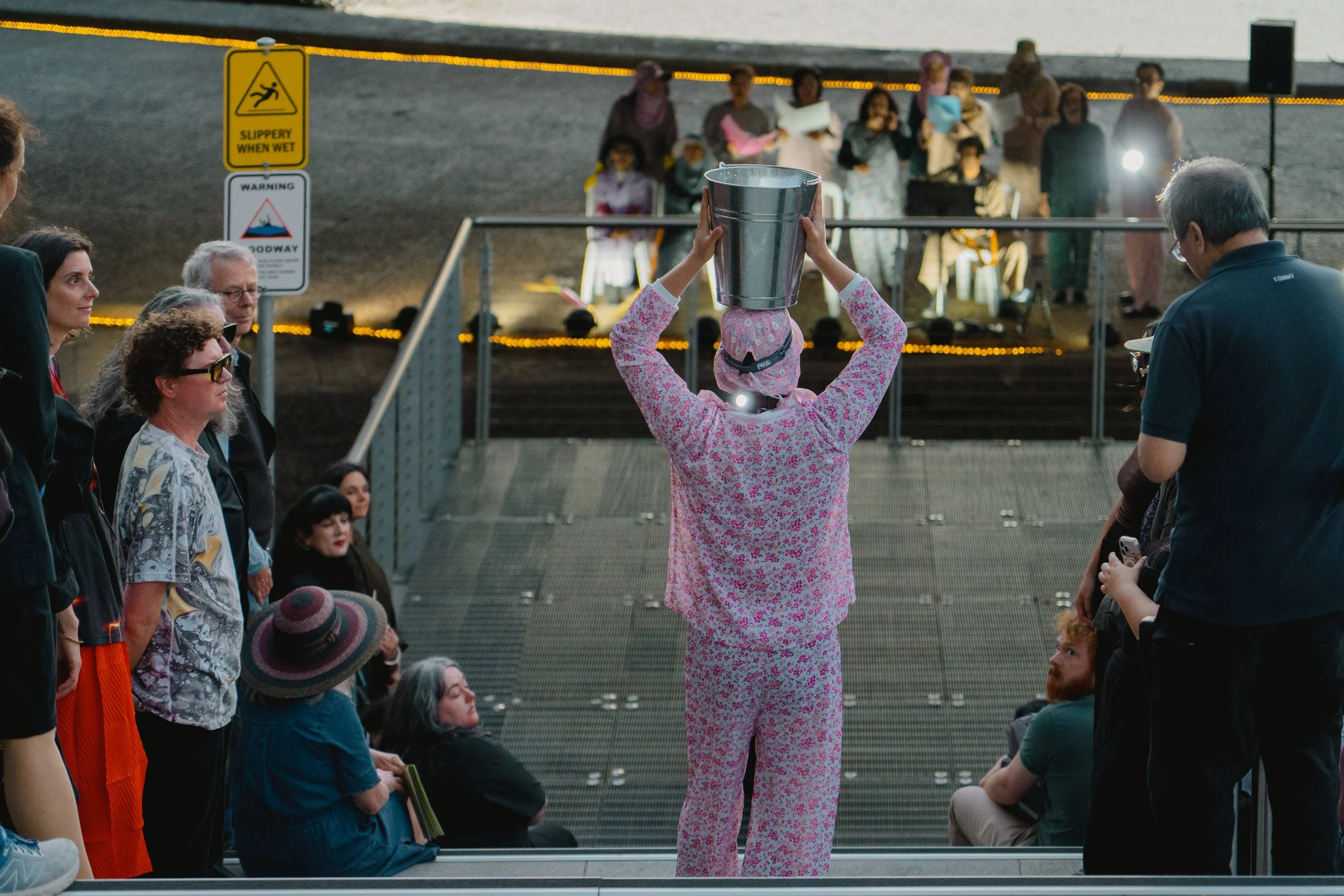
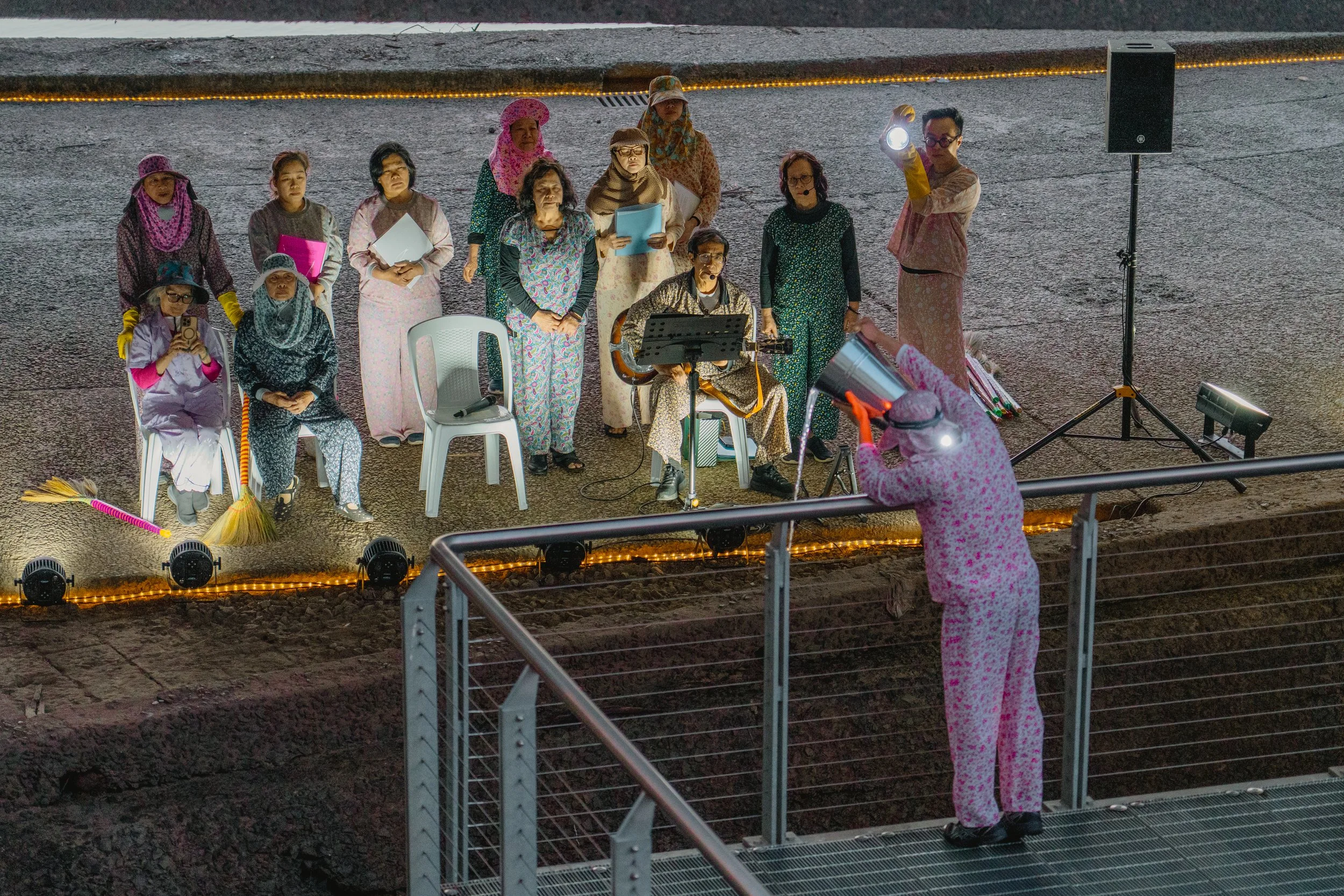
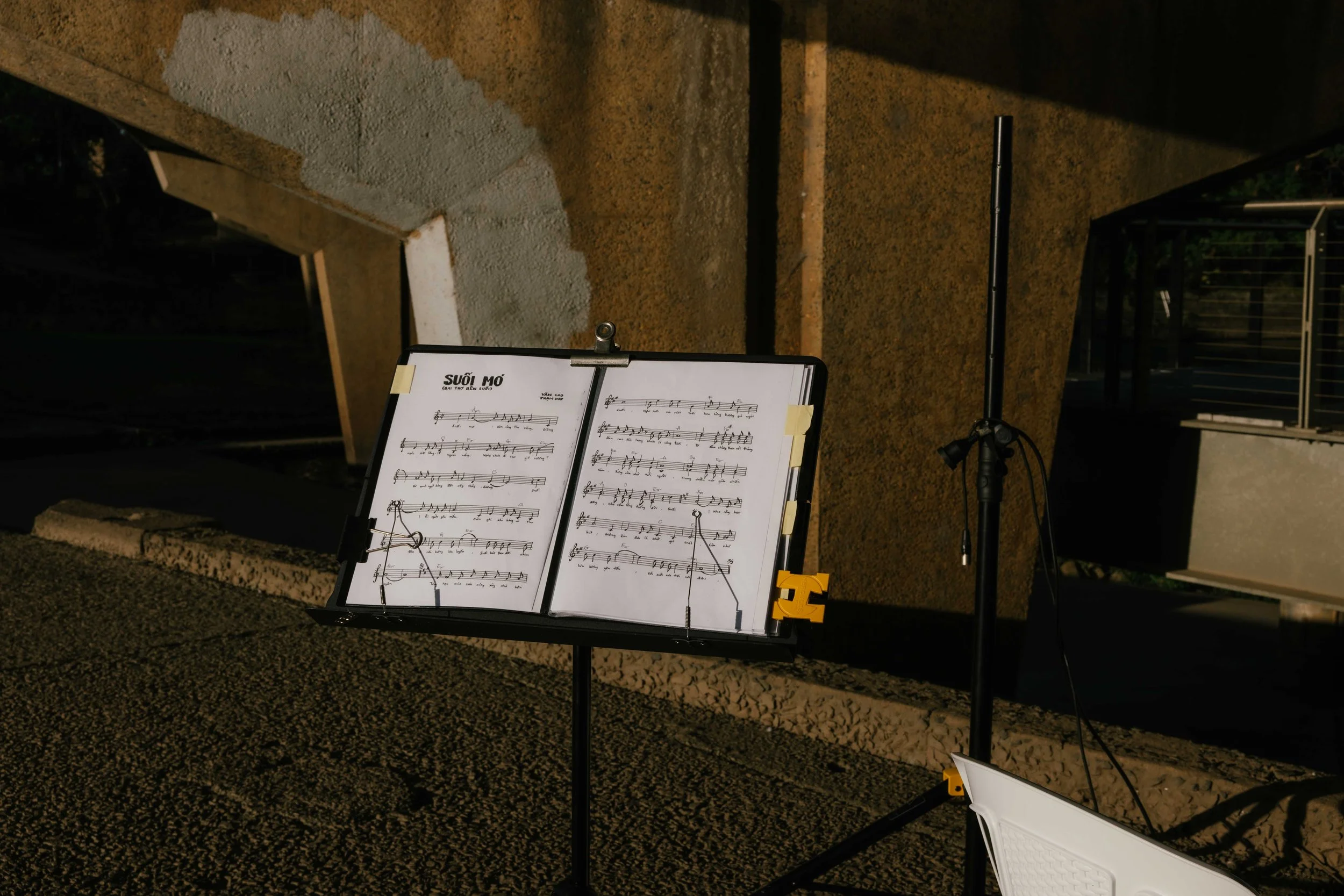
Singing folk songs and laments, the collective movement of Vietnamese people alongside this polluted river system slowly reveals the sorrows, ongoing ailments, and psychological cacophony of exposure to Dioxins. Many of the performers were not only exposed to chemical weapons and bombs in their homeland in Vietnam, but upon arriving in Australia, caught fish and lived by river systems contaminated by these same chemicals—chemicals that were manufactured here and, to this day, still seep into the environment and communities of their new home.
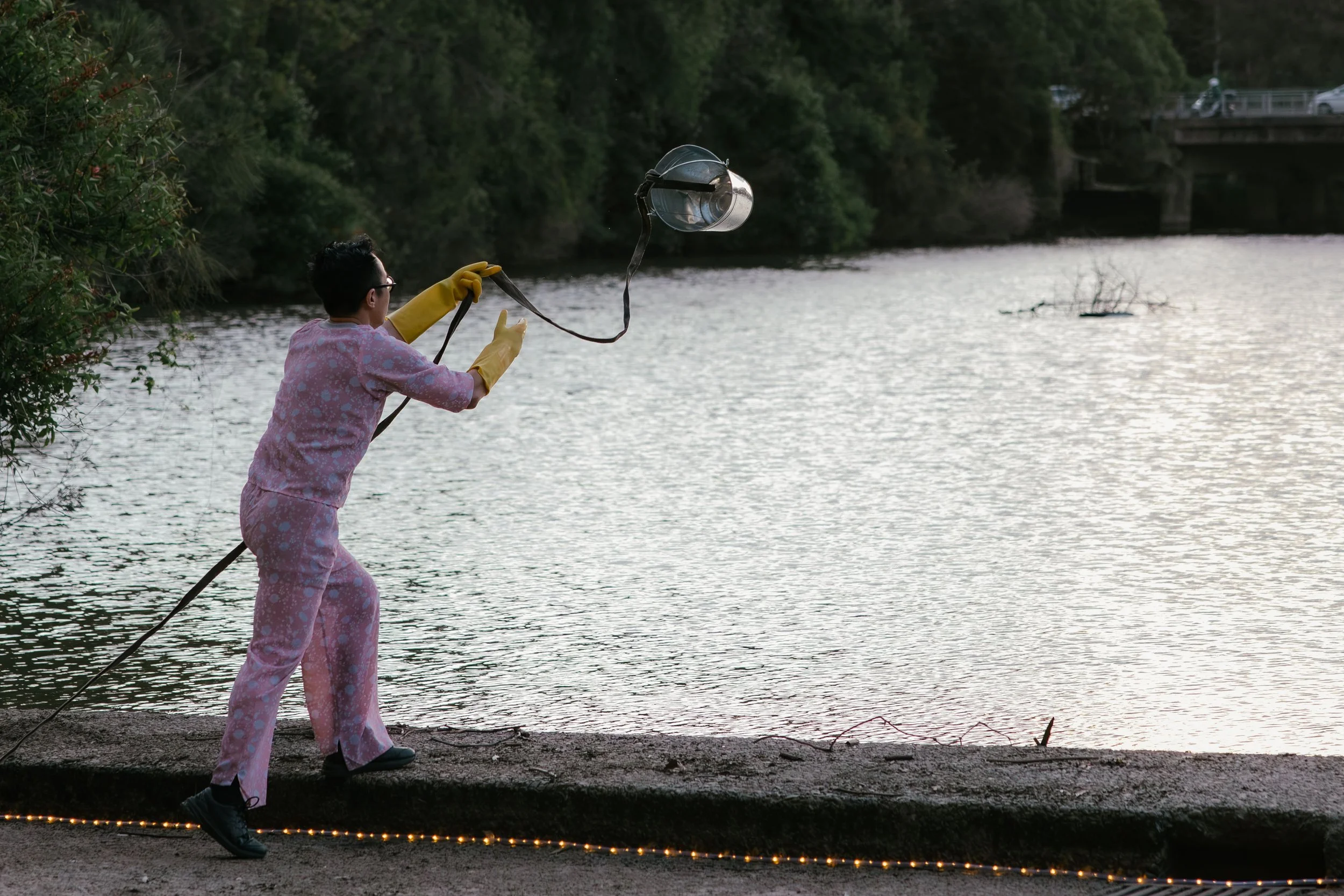
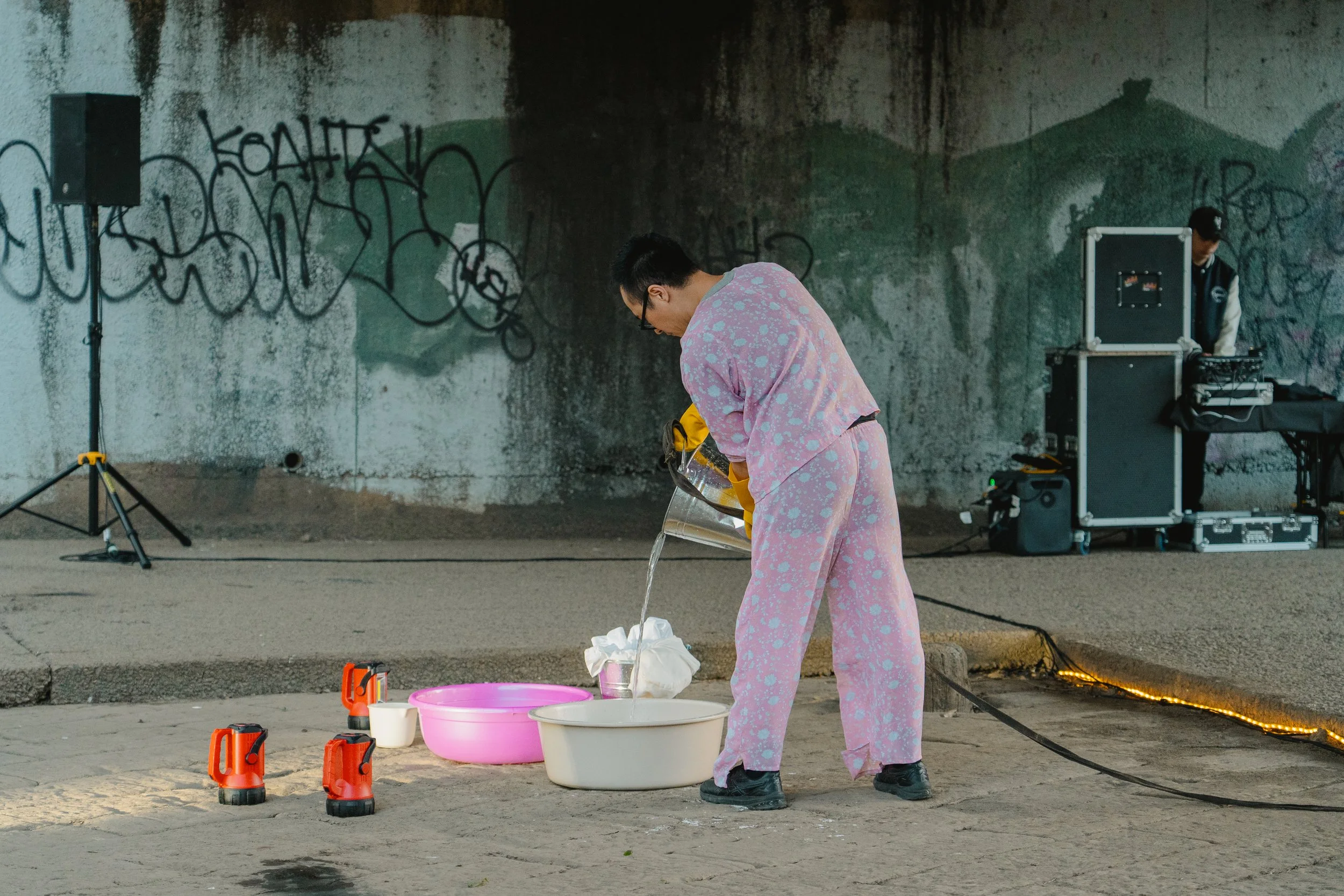
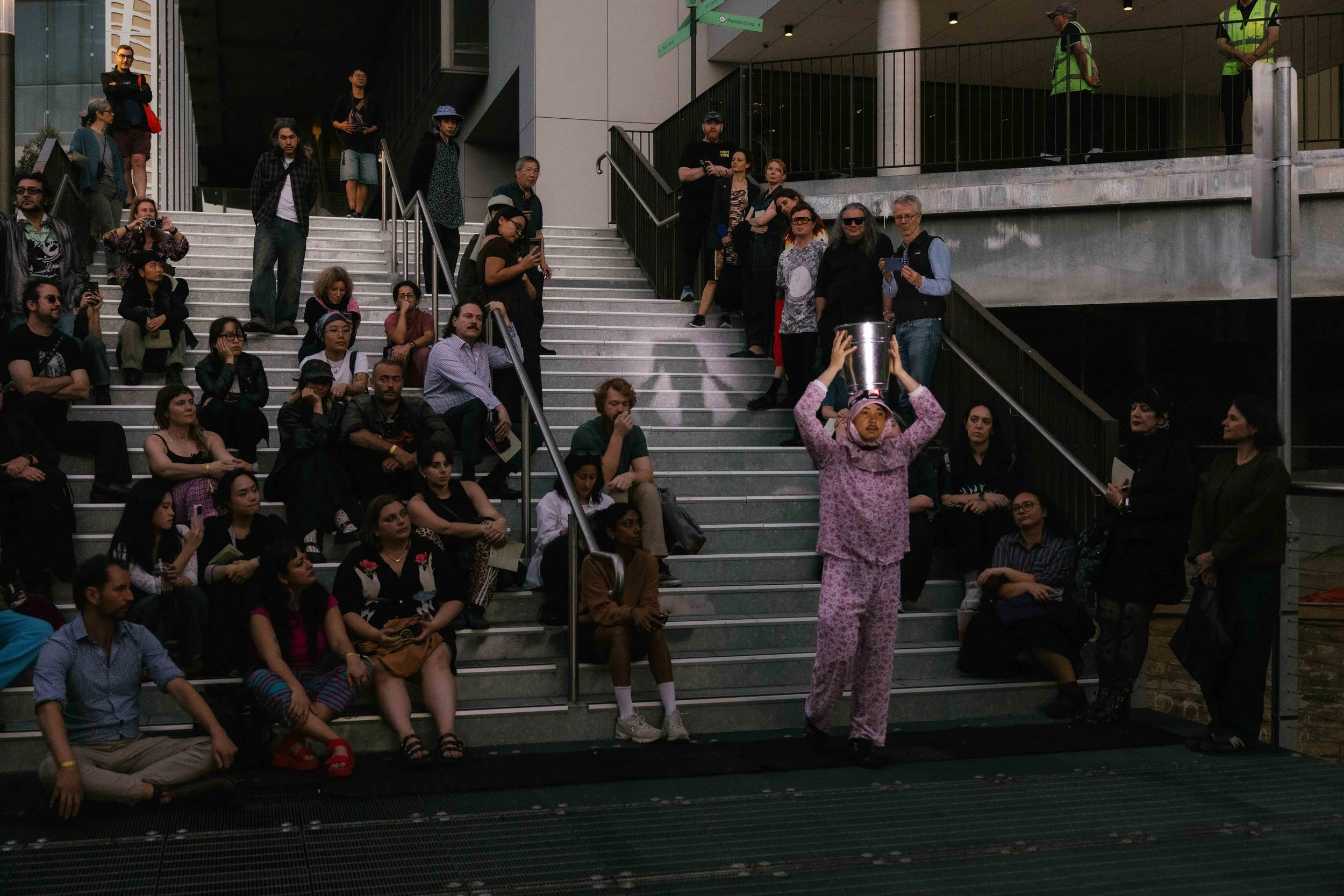
Through gentle gestures and songscapes, what remains is the intergenerational resilience of a community that has not only survived war, but continues to find ways to gather and thrive within contaminated and compromised landscapes.
Performers and singers: Hoàng Thị Ngọc, Nguyễn Thị Vân, Huỳnh Thị Ngọc Loan, Nguyễn Thị Kim Dung, Nguyễn Thị Kim Nhung, Nguyễn Công Chính, Nguyễn Công Trực, Lê Thị Thanh, Lê Thị Hồng Hoa, Nguyễn Hảo Thụy Phương Đào, Thị Mẫn Nguyễn, Tất Phương Nguyễn, Chung Nguyen, James Nguyen.
Choreographed by Chung Nguyen, costumes by Nguyễn Thị Kim Dung, with visual design by Huy Nguyen, produced by Joy Ng, and curated by JD Reforma for the Parramatta Lanes Festival. This project was supported by the generosity of Parramatta Artists Studios (PAS) and the Parramatta Lanes Festival, and was assisted by the Australian Government through Creative Australia, its principal arts investment and advisory body, via the Visual Arts and Craft Strategy (VACS).
It was a profound honour to be given the opportunity to listen to the deeply felt stories, generous knowledge, and time of the Baramadagal Family Group and their extended mob: Jayne Christian, Linda Sainsbury, Heidi Duncan, Willem Brussen, Aunty Julie Christian, Aunty Helen Selwood, and Shane Selwood.
Our mutual respect and understanding of the importance of family, waterways, and state violence through out songlines—through both colonisation and wartime chemical weapons that linger in our bodies, communities, and environment—has helped us to share our many sorrows, joys, and strengths. Gathering becomes an important source of resilience, cultural solidarity, and collective dignity.
(photography by Anna Hay and Sidhi Vhisatya)